

14 January 2026,
Jammu and Kashmir, India – Agriculture is the backbone of Jammu and Kashmir’s economy, employing over 70% of the population. Apple cultivation is particularly significant, accounting for 75% of India’s total production, with districts like Baramulla contributing heavily. Yet small farmers, especially women, face persistent challenges, including urban encroachment, climate variability, and post-harvest losses, which threaten both productivity and income.
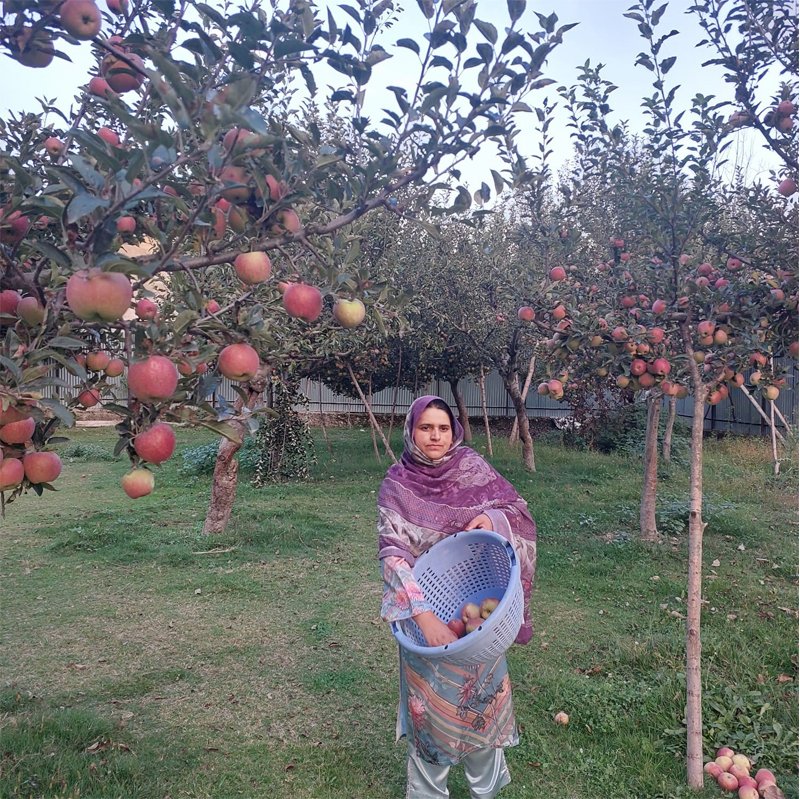
In this challenging landscape, Nazima Bano, a 31-year-old woman from Marazigund village, Baramulla, has emerged as a transformative leader. Once a seasonal apple picker earning daily wages of just INR 3–4 per kilogram, she began her journey at the very bottom of the value chain. Determined to change her circumstances, she embraced opportunities to take control of production, and in 2021, her turning point arrived through training provided by the Self Employed Women’s Association (SEWA)–Shehjar District Association Centre, Kupwara (SCRC) initiative on vermicomposting, apple dehydration, and market linkages.
Nazima has since revolutionized her approach to farming. She cultivates Gala apples, producing around 13,000 kilograms annually, and applies post-harvest techniques such as cold storage to sell at peak prices, grading produce to earn premiums, and dehydrating lower-grade apples to eliminate waste. She has established fair market linkages with partners like Kamla Café and Rudi Multi Trading Company, both SEWA initiatives, ensuring timely payments and transparent pricing, effectively bypassing exploitative middlemen. Emphasizing sustainability, she produces her own vermicompost, reducing chemical dependence and improving soil fertility. She also maintains a kitchen garden, which provides both additional income and household nutrition.
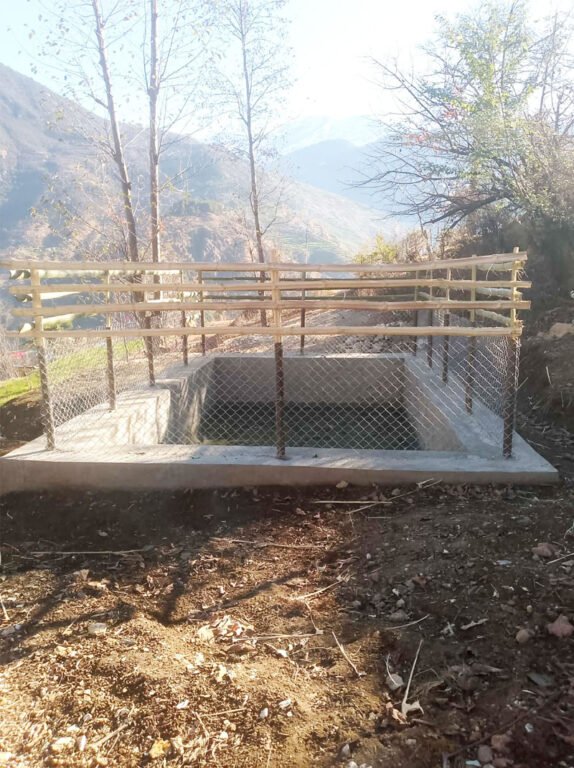
To further strengthen post-harvest management and market access, in 2023, the SEWA–Shehjar District Association Kupwara received funding of USD 33,214 from the APFP-FO4A program for the establishment of an apple juice processing center, including facilities for grading and marketing raw apples. This investment significantly enhanced value addition opportunities for women farmers like Nazima, enabling better price realization, reduced losses, and more stable market access.
The Asia-Pacific Farmers’ Program (APFP) – Farmers’ Organizations for Asia (FO4A) is implemented by the Asian Farmers’ Association for Sustainable Rural Development (AFA) and La Via Campesina (LVC), with funding from the European Union (EU) and the International Fund for Agricultural Development (IFAD). The program aims to strengthen the capacities of farmers’ organizations to provide economic services, advocate for enabling policies, and promote sustainable livelihoods for small-scale family farmers across Asia. APFP-FO4A is implemented in India by the Self Employed Women’s Association (SEWA).
These innovations have nearly doubled her seasonal income, which now ranges from INR 2.30–2.50 lakh (USD 2,760–3,000), compared to her earlier earnings of around INR 80,000 (USD 887). Beyond financial gains, her improved income has enhanced her family’s nutrition, healthcare, and education opportunities. She says, “I am very thankful to SEWA, AFA-LVC, IFAD, and EU for their support. My family can have balanced meals, and my children can go to better schools.”
Nazima’s journey extends far beyond personal success. Recognized as a cluster head, she mentors 300 women farmers across Baramulla and Kupwara districts, conducting training sessions, ensuring production quality, and promoting sustainable practices. In doing so, she has become a role model for rural women, breaking traditional barriers and inspiring others to participate in income-generating agricultural activities.
Her adoption of organic farming and vermicomposting has also brought ecological benefits, improving soil health, reducing chemical inputs, and producing healthier crops for her community. Looking ahead, Nazima envisions expanding her orchard through high-density plantations, leading a women’s collective for apple drying and export, and training over 100 women in sustainable farming and agribusiness skills in the next three years.
Despite the challenges she has faced, including initial low-wage work, market exploitation, unpredictable climate patterns, cultural barriers, and limited resources, Nazima’s story demonstrates the transformative power of capacity building, fair market access, post-harvest management, and women’s leadership. Her experience shows that when women are supported with training, infrastructure, and institutional linkages, they can not only improve their own livelihoods but also create lasting social, economic, and ecological impact.
Nazima Bano’s journey is a testament to women’s empowerment, sustainable agriculture, and community resilience, illustrating how targeted interventions can enable rural women to rise from laborers to leaders, transforming both their families and communities.
Facilitating Factors
-Grassroots Training and Support: Capacity building on vermicomposting, grading, dehydration, and market linkages through the Shehjar Sisterhood initiative.
-Institutional Linkages: Access to fair and transparent buyers such as Kamla Café and Rudi Multi Trading Company ensured dignity, timely payments, and fair prices.
-Infrastructure Access: Use of cold storage facilities reduced post-harvest losses and protected against market price crashes.
-Leadership Role: Recognition as cluster head gave her authority, confidence, and an enabling platform to mentor other women.
-Adoption of Sustainable Practices: Vermicompost production and crop diversification improved soil health and reduced risks.
Challenges
-Initial Position in the Value Chain. Started as a low-wage daily apple picker with no control over production or profits.
-Market Exploitation. Local traders often delayed payments and dictated prices, undermining small farmers’ bargaining power.
-Climate Risks. Unpredictable snowfall and rainfall patterns continue to threaten production and quality.
-Cultural Barriers. As a woman farmer, gaining recognition and leadership in a male-dominated sector required extra effort.
-Scaling Limitations. Limited landholding and resources restrict the expansion of high-density plantations and collective enterprises.
Lessons Learned
-Capacity Building Transforms Roles. Skills training can shift women from laborers at the bottom of the value chain to recognized entrepreneurs and leaders.
-Fair Market Linkages Are Critical. Transparent buyers and collective marketing models can dismantle exploitative practices and restore dignity.
-Post-Harvest Management Adds Value. Techniques like grading, cold storage, and dehydration ensure better prices, reduce wastage, and build resilience.
-Women’s Leadership Multiplies Impact. When women like Nazima become cluster heads, they not only improve their own livelihoods but also mentor and uplift dozens of others.
-Sustainability Enhances Resilience. Organic inputs and diversification strengthen long-term soil health, food security, and adaptability to climate change.
-Institutional Support Matters. Linkages with organizations and collectives enable scaling, visibility, and access to resources otherwise out of reach for individual farmers.
Recommendations
-Strengthen Women’s Farmer Collectives. Support the formation and scaling of women-led producer groups and cooperatives to improve bargaining power and ensure fair market access.
-Expand Post-Harvest Infrastructure. Increase investment in cold storage, grading units, and dehydration facilities at the community level to reduce losses and add value.
-Enhance Market Linkages. Facilitate long-term partnerships with potential buyers, retail chains, and exporters to guarantee stable demand and fair pricing.
Mainstream Climate-Resilient Practices. Train farmers on organic inputs, integrated pest management, and water-saving methods to adapt to erratic weather patterns.
Reference : from AFA
Comment: