

Rural Voices |January 20. Women play a central role in global food systems and rural economies, yet their economic potential remains largely unrealized. In fact, closing the gender gap in productivity alone could boost global GDP by nearly a trillion dollars.
IFAD’s work to build resilient rural economies has women’s empowerment at its core. Our investment in gender equality significantly strengthens food security and nutrition, raising agricultural output and national GDP.
Today, women represent more than half of IFAD project participants. 2026 marks the International Year of the Woman Farmer, and we will further scale up efforts to strengthen women’s roles across the entire value chain – from production and processing to markets and retail.
Boosting business
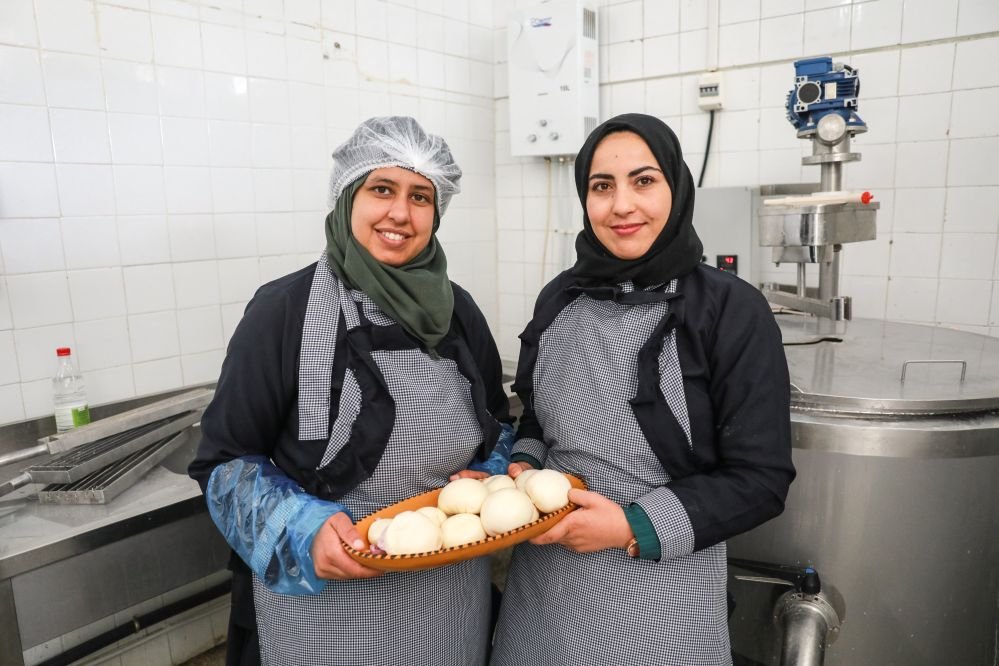
In Türkiye, women make up only about a third of the labour force. But with support from IFAD and the Government of Türkiye, rural women in Central Anatolia are gaining access to decent work and setting up their own thriving businesses.
The GTWDP project, which received US$18 million loan from IFAD along with government funding, has already positively impacted more than 100,000 rural people. 50 per cent of these are women, well over the project’s original target, and most report improvements in their economic independence, workloads and overall well-being.
To date, more than 1,200 matching grants have been awarded to women, primarily focused on small agricultural machinery that saves them time and effort. The result has been economic empowerment that benefits the entire economy, with overall income gains of between 10-30 per cent.
Nazl? turned her baking cooperative in Central Anatolia into a modern, flourishing business thanks to financial support and equipment from GTWDP worth US$18,800.
Adding value
In Peru, the Avanzar Rural project places particular emphasis on women’s empowerment – and the results speak for themselves. Financed by IFAD and the Government of Peru, the project was recently ranked IFAD’s best-performing out of more than 190 worldwide.
By driving climate adaptation, improved market access and low-cost, efficient technology that boosts productivity, especially for women, the project has improved the lives of more than 20,000 rural households. Multiple woman-focused targets have already been exceeded, including overall reach and leadership training by 66 and 52 per cent, respectively.
Through strengthened farmers’ organizations, thousands of producers have secured formal agreements with commercial partners, enabling them to grow their businesses and reinforcing local value chains. Many of these organizations are led by women, challenging discriminatory norms in communities that have traditionally limited female leadership – the project exceeded its female leadership target by more than 50 per cent.
Ruth is Vice President of the Jempe Baku Conasha Association, which has become a key player in the local cacao value chain with Avanzar Rural’s support.
Training and employment
In Egypt, the SAIL project invests in small-scale farmers who have settled in newly irrigated agricultural lands through farmer field schools (FFS). The initiative, which received financing from IFAD and co-financing from ASAP and the Global Environmental Facility, has taken deliberate steps to ensure that women enjoy these benefits equally.
In a context where social norms restrict interactions between men and women, FFS have been successfully adapted to enable women’s participation. Between 2017 and 2024, SAIL set up a total of 350 FFS, most of them involving mixed-gender groups.
Women participating in the project have increased their productivity, improved food security and raised incomes while adopting improved farming practices. As restrictive gender norms continue to shift, women’s representation in community development associations has also increased, strengthening their voice in local decision-making.
Comment: