

JibanSejuwal
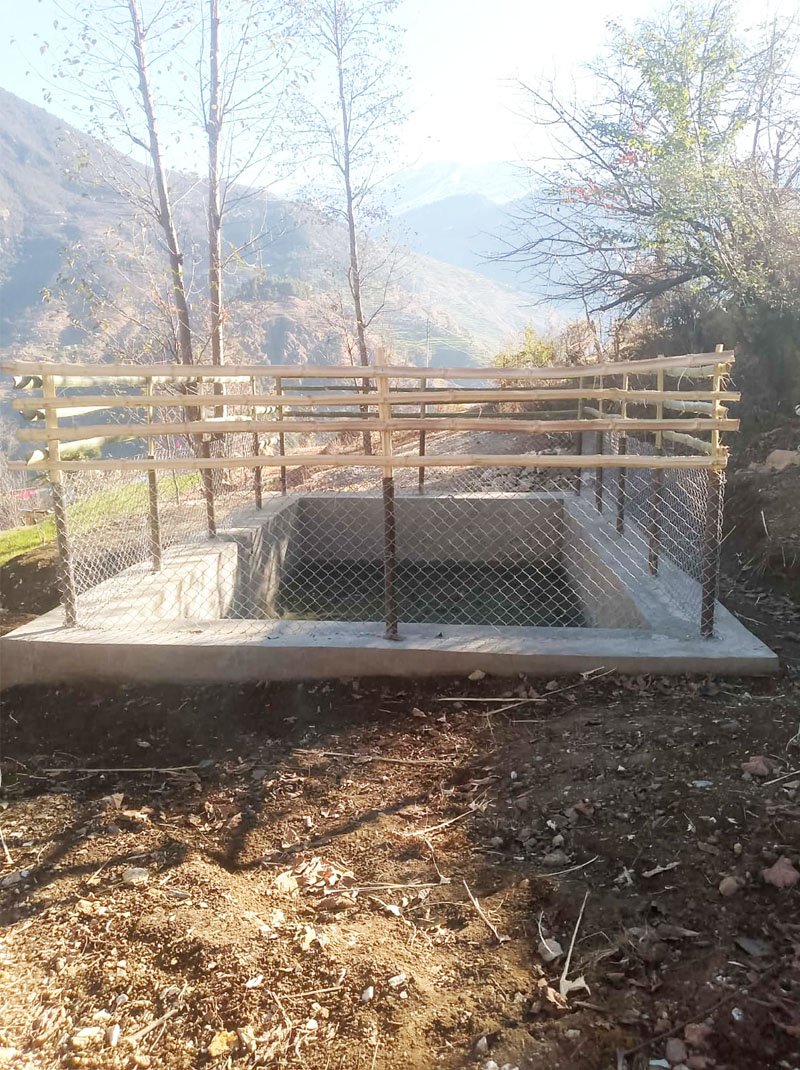
Mugu, 14 march, The construction of an irrigation pond in Seri village of Barekot Rural Municipality–2, one of the remote areas of Jajarkot district, has raised new hopes among local residents for agriculture and livelihood improvement.
After the earthquake that struck on November 3, 2023 (Kartik 17, 2079 B.S.) caused of massive damage in Jajarkot and periphery of surrounding areas. The disaster claimed 154 lives, injured 336 people and affected nearly 250,000 others. The quake severely damaged agricultural land, livestock facilities, drinking water and irrigation infrastructures, pushing local communities into serious challenges in income generation, food security and daily livelihoods.
Amid these difficulties, the construction of the irrigation pond in Seri village has brought relief to 35 households. The project was implemented by Chhaya Nepal with financial support from the Government of Japan in collaboration with the United Nations Development Program (UNDP) and the United Nations Human Settlements Program (UN–Habitat).
The irrigation pond, constructed at a cost of approximately NPR 671,598, is expected to provide irrigation to around 90 hectares of farmland. Locals believe the project will help revive agricultural activities on land that had remained barren for years due to lack of water.
Previously, residents of Seri village struggled even for drinking water. Water is now being collected in the pond through a pipeline from a source located about 1,200 meters from away. With improved irrigation facilities, farmers have started cultivating crops such as kiwi, lemon, orange, barley, wheat and millet, expecting increased agricultural production and income generation in the village.
According to Construction Committee Chairperson Nabin Gharti, water from the pond is not only used for irrigation but also for personal hygiene and livestock. “This irrigation pond has become a multi-purpose resource for the community,” he said.
Local resident Hastamaya Gharti said that despite having cultivable land, farmers were previously dependent on rainfall. “When rain did not arrive on time, crops would dry up and fields remained barren,” she said. “Now with irrigation available, our fields will turn green and we hope to increase our income from farming.”
She added that the pond water is also being used for sanitation and livestock, bringing significant relief especially to women in the village.
Various programs are being implemented in earthquake-affected areas to strengthen community infrastructure, improve livelihoods and build resilience against future disasters. Similar initiatives are currently being carried out in the quake-hit districts of Jajarkot, Rukum and Salyan in Karnali Province.
According to Min Bahadur Rawal, Karnali Province Manager of Chhaya Nepal, the program aims to support community infrastructure development, improve local marketplaces and promote market-based livelihood activities.
Comment: