

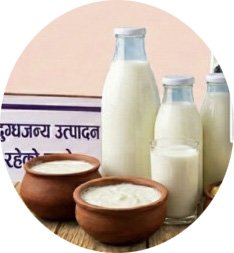
May 25, Nutrition is foundational to rural transformation. Rather than a standalone issue, nutrition is inextricably linked to resilient food systems and rural economies – both a driver and an outcome of sustainable development. The annual global cost of malnutrition is as high as US$3.5 trillion in lost potential, reduced earnings and poor health outcomes.
This makes nutrition-sensitive investments – which address the root causes of malnutrition – a major opportunity. From programmes that link small-scale farmers to school meals to those that promote the production of diverse, nutrient-rich crops, these investments can yield significant returns for Member States and donors: every dollar spent on improving nutrition generates an economic return of US$23.
IFAD’s proven work investing in rural communities in partnership with governments and donors gives us a unique role and comparative advantage in nutrition. Our updated Nutrition Action Plan (2026-2031) lays out how IFAD will secure the sustainability of its nutrition-sensitive investments and align them with national priorities. By reinforcing IFAD’s commitment to systematically integrating nutrition objectives, the Action Plan ensures that our investments shape productive, resilient food systems.
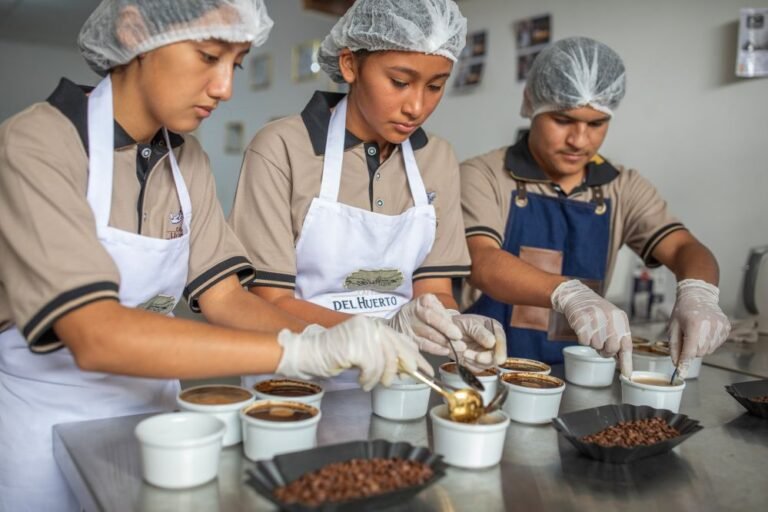
In Kiribati, Boite prepares healthy meals for schoolchildren thanks to investment through the IFAD-funded PIRAS programme. © IFAD/Stephanie Simcox/Panos
School meals drive local growth
School feeding programmes are a prime example of how nutrition-sensitive investments can catalyse locally driven economic growth. Because schools require food on a regular basis, they can create predictable markets for local farmers, sustainably raising incomes and anchoring food systems in domestic economies. In times of crisis, school meals are also a stabilizing investment – protecting children while sustaining rural livelihoods.
IFAD invests in home-grown school feeding programmes that reinforce this link between better nutrition for children and stable demand for local producers. We do not deliver meals directly – instead, our investments strengthen local food systems and rural economies so that small-scale producers can supply these programmes reliably and at scale.
In a context of increasing climate shocks, these investments can simultaneously strengthen resilience, livelihoods and food security. In Kenya, for example, the Climate Resilient Home-Grown School Feeding Initiative – a joint effort by IFAD, FAO and WFP – is linking IFAD-supported cooperatives with participating schools. The nutritious local grains grown by the farmers who participated in IFAD’s KCEP-CRAL programme are now used in meals eaten by local children.
Together with our partners, IFAD supports governments in scaling national programmes, promoting a triple win: better nutrition for children, stable markets for farmers and stronger local economies.
PADMAR, a project in Benin that received targeted funding from Norway, boosted nutrition while creating more than 3,000 jobs along horticultural value chains.
The power of partnerships
As the experience with school meals shows, no single actor can deliver on nutrition alone. Lasting impact requires a move beyond fragmented funding towards coordinated, catalytic investment that brings in partners as multipliers. IFAD uses public resources to crowd in additional investment from governments, the private sector and other partners.
Targeted funding from Norway, for example, facilitated nutrition-sensitive investments in existing IFAD programmes across seven African countries: Benin, Burkina Faso, Malawi, São Tomé and Príncipe, Sudan, Zimbabwe and Madagascar. A total of 263,835 rural people were positively impacted by the recently completed grant programme.
This is how IFAD approaches nutrition: scaling what works, strengthening partnerships and ensuring that investments reach the first mile, where it can have the greatest impact.
Nutrition is not only a development outcome; it is an investment in human capital, resilience and economic prosperity. By investing in nutrition-sensitive food systems and rural livelihoods, IFAD is building healthier communities, stronger rural economies and a more resilient future.
Comment: