

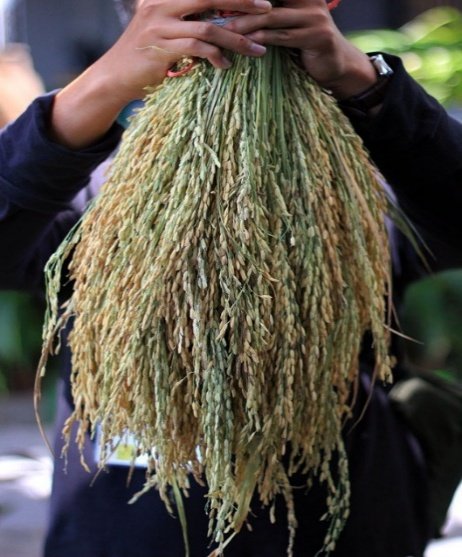
February 5, Agroecology, a farming concept that upholds harmony of environment, social, and economic aspects, has become a main focus for the Serikat Petani Indonesia (SPI) (Indonesian Peasants Union) in developing a sustainable farming model. For SPI, agroecology is not just a farming method, but it is also a philosophy of life that underlies farming practices that comprehensively integrate environmental aspects with the socio-economic aspects of farming communities. Through this concept, SPI strives to create a farming mechanism that not only generates economic benefits, but also provides social benefits for farming families and communities, while at the same time maintaining environmental conservation sustainably.
The agroecological farming practiced by SPI is rooted in family farming traditions that possess local wisdom in managing natural resources with high appreciation and sustainability. The main goal is to break the farmers’ dependence on external inputs and market rulers that often dominate agrarian resources. In practice, the concept of agroecology involves various concrete actions, ranging from designing and managing sustainable agricultural ecosystems to developing food systems based on traditional knowledge and local food system experiences.
The Food Sovereignty Area (Kawasan Daulat Pangan) is a real manifestation of the concept of food sovereignty and agroecology applied by SPI. In this area, the residents apply the concept of food sovereignty by utilizing all natural resources agroecologically. This not only impacts the provision of sufficient, safe, healthy, and nutritious food, but also has a positive impact on the regional economy that prospers its people. The Food Sovereignty Area is supported by various laws governing agrarian, food, farmer protection, sustainable agricultural land protection, and the United Nations Declaration on the Rights of Peasants and Other People Working in Rural Areas (UNDROP).
One concrete example of the success of this concept can be seen in the Food Sovereignty Area of Merakurak District, Tuban Regency, East Java. Inhabited by a population of around 2,600 people, 60% of its residents are peasants. Through agroecological farming, peasants in Senori Village are able produce dry harvest grain/rice in husk (GKP) and corn in sufficient quantities to meet food needs not only for their own families, but also for neighboring villages and other districts. The peasants are even able to market their agricultural products to neighboring provinces through collective marketing with the Indonesian Peasants Cooperative (KPI) Tuban.
Senori Village is also an example of success story in seed sovereignty by developing 20 rice variety of SPI’s which excels in quality and productivity. The 7th President of the Repbulic of Indonesia and the Ministry of Agriculture also gave full support to the concept and practice of agroecology applied by SPI, including in the formulation of policies on organic fertilizers. Similar support also comes from the Ministry of Cooperatives and SMEs in supporting the agroecological rice downstreaming program.
Meanwhile, at the same time, through the coop-to-coop business, the Indonesian Peasants Cooperative (KPI) Tuban collaborates with other cooperatives, such as the Indonesian Peasants Cooperative (KPI) Bogor and the Indonesian Peasants Cooperative (KPI) Indramayu, in the production and marketing of agroecological water spinach seeds. This cooperation scheme aims not only to increase peasants’ income, but also to provide benefits through education, training, and other benefits that are concentrated on peasants who are members of SPI and the Indonesian Peasants Cooperative (KPI).
Overall, the implementation of the agroecology concept in the Food Sovereignty Area (Kawasan Daulat Pangan) is concrete evidence that sustainable, competitive, and socially just agriculture can be realized through the integration of local wisdom and comprehensive policy support. Agroecological practices and cooperative efforts can strengthen SPI’s organization as a mass movement organization of peasants and rural communities. The concrete steps taken by SPI and peasants cooperatives have brought significant positive impacts to the welfare of peasants, the environment, and society as a whole (SPI Knowledge Management).

Comment: