

Press release |
Kathmandu May 29, Mexico City A high-level delegation from the International Fund for Agricultural Development (IFAD) visited Mexico this week to reaffirm its partnership with the Government of Mexico and make progress on implementing a new country strategy aimed at strengthening food sovereignty, increasing the climate resilience of small-scale farmers, and promoting social inclusion in rural areas. The delegation held meetings with Mexican government officials to coordinate joint efforts within the framework of the new Country Strategic Opportunities Programme (COSOP) for 2026-2031. The COSOP will guide IFAD’s investments in Mexico, which will focus primarily on the southern states, where the greatest development challenges remain.
Donal Brown, IFAD’s Associate Vice-President for Operations, noted during the visit that, “Mexico and IFAD have a long-standing partnership based on a shared vision of rural transformation. The COSOP for 2026-2031 reflects this shared vision and is aligned with national priorities aimed at strengthening agricultural production, generating employment and expanding opportunities in the most vulnerable rural areas.”
Developed by IFAD and the Government of Mexico, the country strategy will boost production capacity and improve producers’ access to markets, for example through technological solutions and technical assistance.
To counter the effects of climate change, rural communities will strengthen their resilience by restoring degraded soils and adopting climate-smart technologies. The strategy will also promote greater social and economic inclusion of women and Indigenous communities through financial education programmes, access to products tailored to their needs, and greater participation in agricultural and forestry activities.
Resilience in the Balsas River basin
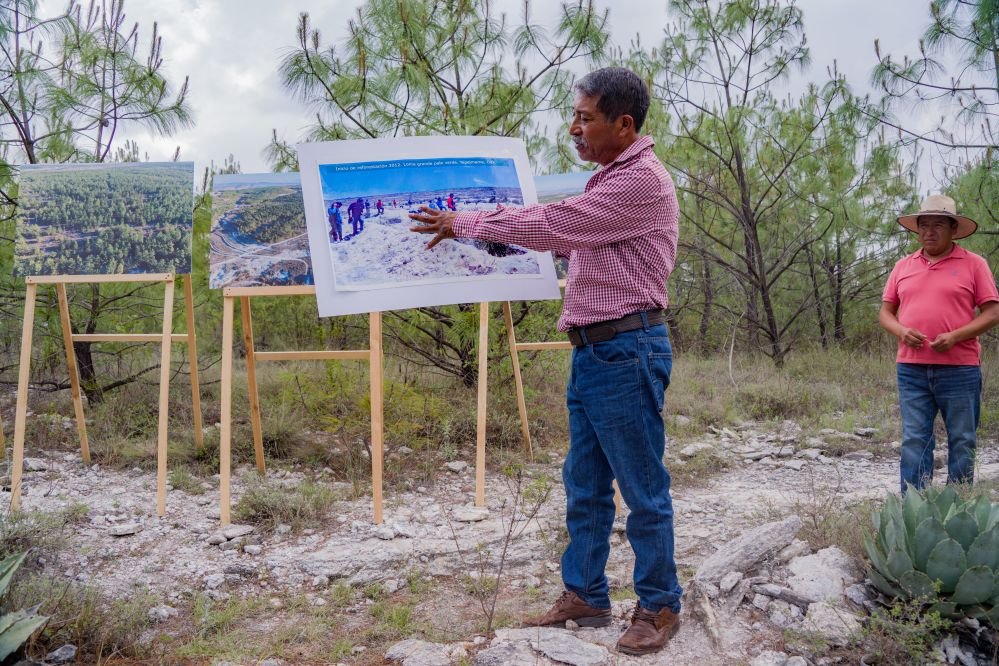
IFAD is currently cofinancing the Resilient Balsas Basin project in Mexico, implemented by the National Forestry Commission. During the mission, the delegation learned about an ambitious environmental restoration initiative led for over 20 years by Indigenous communities in the Mixteca Alta region of Oaxaca, which is currently being backed by the Resilient Balsas Basin project. The communities in the region have restored more than 25,000 hectares through soil conservation works and tree planting. Transforming this degraded arid area into a forest refuge that yields tangible benefits, such as increased water availability for local communities.
Rocío Medina Bolívar, IFAD’s Regional Director for Latin America and the Caribbean, emphasized that “the Resilient Balsas Basin project demonstrates how strategic alliances between different financing partners can multiply the impact of investments. In addition to contributing its own resources, IFAD has the capacity to coordinate projects and mobilize additional financing to foster long-term rural development.
In addition to Oaxaca, the Resilient Balsas Basin project is carrying out activities in seven other Mexican states – Guerrero, Jalisco, State of Mexico, Michoacán, Morelos, Puebla and Tlaxcala – working alongside rural communities to promote the production, processing and marketing of goods derived from sustainable use of forest resources.
The project represents an investment of more than US$90 million, financed by IFAD, the Government of Mexico and the Green Climate Fund, and will have a positive impact on 200,000 people.
IFAD’s new country strategy will also promote private sector participation in rural development. This was the central theme of a dialogue organized by IFAD and the School of Government and Public Transformation at Tecnológico de Monterrey, which brought together participants from multilateral institutions, the public sector, the private sector, development banks and academia.
The gathering also highlighted the private sector’s fundamental role in rural development and food systems transformation in Mexico. IFAD also presented its strategy for private sector investment in Mexico for the coming years with a view to identifying new opportunities and areas for collaboration.
Comment: